


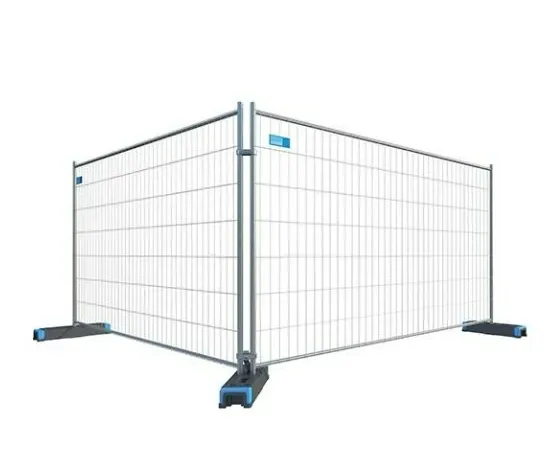
Strong Protection
Wire Mesh Fence To Protect Your Safety

Not sure what kind of product is right for you?
Just ask for a call back and our friendly fence expert will contact you as soon as possible.
stanchion queue barrier
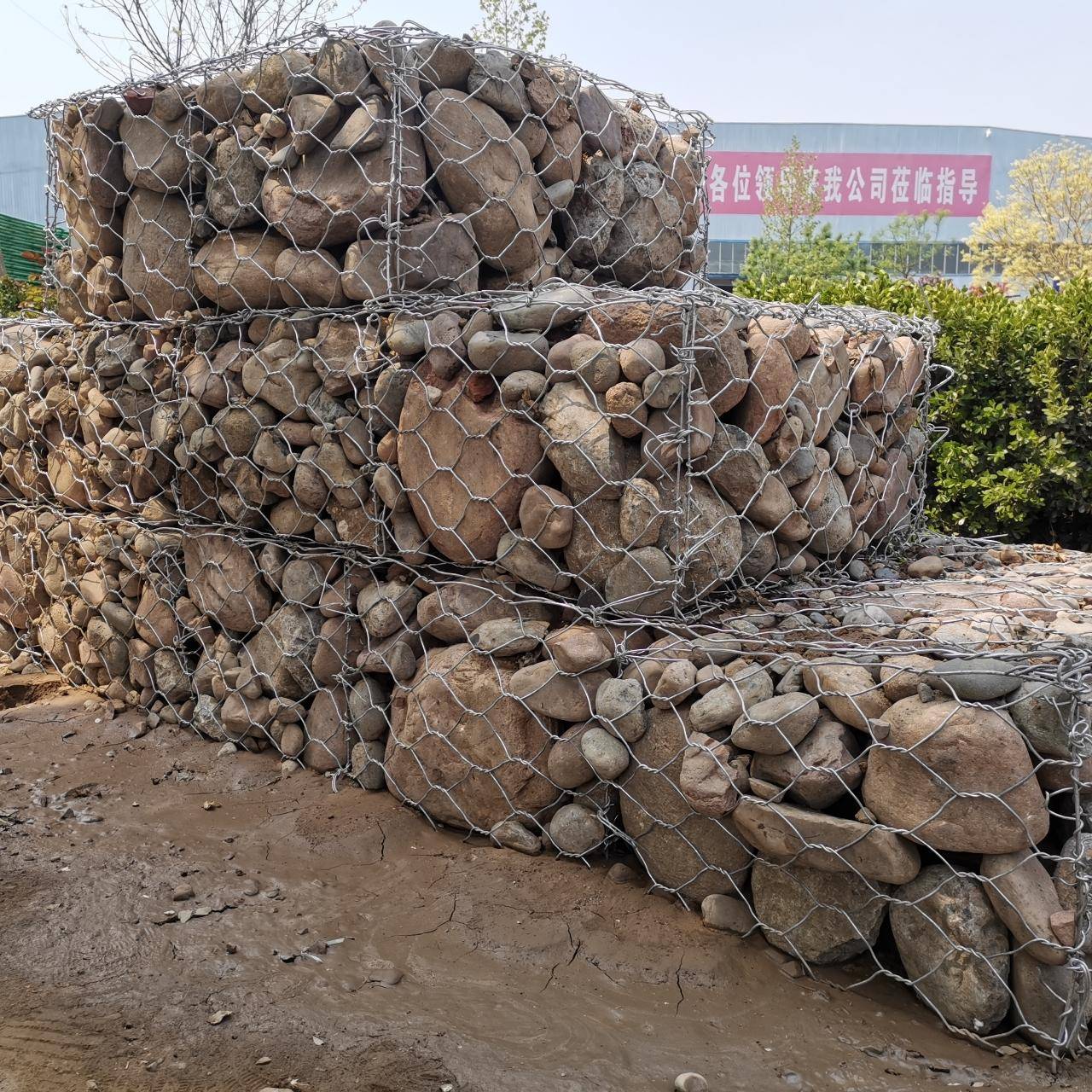
Hesco Wall Barrier: a heavy-duty take on crowd barriers for sale If you manage large events or perimeter security, you’ve probably noticed a shift. Temporary fences still have their place, sure, but high-stakes venues are quietly moving to geotextile-lined bastions—the Hesco-style wall barrier—because it handles crowds, vehicles, wind loads, and, frankly, the unexpected. I’ve watched production crews cut setup time in half with these modular units. They aren’t glamorous, but they do the job when stakes are high. What it is and why it’s trending The Hesco wall barrier is a welded steel mesh cage lined with heavy geotextile. You fill it with earth, sand, gravel, or crushed rock and—voilà—you’ve got a rigid, high-mass barrier. Event teams use it for crowd channels, stages, back-of-house shielding, and anti-ram perimeters. Security folks like the mass; operations teams like the speed. And yes, it’s overkill for a farmer’s market—but for stadium concerts, festivals, rallies, ports, and temporary military zones, it’s increasingly the default. Product snapshot: Hesco wall barrier (CHCH Fence, Anping, China) Product type Welded mesh, geotextile-lined bastion Material (wire) Galvanized steel wire or Galfan (zinc-5% aluminum) Wire diameter ≈ 4.0–5.0 mm (real-world use may vary) Mesh aperture 76.2×76.2 mm; 50×50 mm; 75×75 mm; 100×100 mm Geotextile liner ≈ 250–400 g/m², colors: sand, brown, gray, military green Typical coating Zn or Galfan to ISO 1461/ASTM A641; coating mass often ≈ 230–275 g/m² Steel tensile strength ≈ 450–550 MPa (manufacturer data) Service life ≈ 5–10 years outdoors, environment-dependent Manufacturing and testing (quick walkthrough) Materials: galvanized or Galfan wire; non-woven geotextile (EN ISO 10319 tensile-tested). Methods: resistance-welded mesh panels; spiral or C-rings for joining; liner stitched and fitted. Coating: zinc or Galfan to ISO 1461/ASTM A641; sample salt-spray checks to ISO 9227 (often 240–480 h). QC: mesh aperture gauges, weld shear tests, liner puncture per ASTM D4833 (typical lab practice). Packing: collapsible units on pallets for fast deploy; fill on-site with locally available aggregate. Where it’s used (and why it works) Use cases I’ve seen first-hand: stadium outer rings, festival crowd lanes, protest buffers, temporary vehicle stand-off zones, coastal or flood-prone event grounds (dual-use is handy). Advantages include mass-based stability, wind resistance, and modularity. With proper fill, units can contribute to anti-ram design strategies referencing ASTM F2656 guidance—talk to your engineer, of course. Customization options Choose mesh size for stiffness, geotextile weight for abrasion, liner color to blend with branding, and module lengths to suit corners and channels. Logos and reflective IDs can be added; some clients specify lock-wire and tamper seals. It seems small, but clear zone labeling reduces crowd confusion—many customers say it cuts gate delays. Field notes and feedback “We set 180 m of barrier in a morning,” a Gulf-region operations manager told me—fewer posts, fewer trip hazards. In flood season, the same site re-used the units as water deflection. Surprisingly versatile. Typical maintenance: spot-check liners after high footfall and replace scuffed panels—cheap compared with rescheduling an event. Vendor comparison (summary) Vendor Wire/Coating Geotextile Lead time Docs Indicative cost CHCH Fence (Anping, China) Galfan/galv., 4–5 mm 250–400 g/m² ≈ 2–4 weeks Mill test, coating reports $$ (value) Local fabricator Varies; mostly galv. ≈ 200–300 g/m² Short if in stock Basic COA $–$$ Import brand (retail) Galfan premium 300–400 g/m² Stock-dependent Full datasheets $$$ Process, standards, and service life For planning, reference the Purple Guide (events), local building codes, and, where vehicle mitigation is expected, consult ASTM F2656-qualified engineers. Typical service life runs 5–10 years outdoors; Galfan plus ≥ 300 g/m² liners and covered storage extend it. Factory salt-spray to ISO 9227 and tensile checks per EN ISO 10319/ASTM D4595 are good signs you’re buying quality. Origin note: CHCH Fence manufactures in Anping County, Hebei, China (No. 12 TH South of Weier Road, West of Jinsi Road). Logistics from Tianjin are usually straightforward, in my experience. If you’re scanning the market for crowd barriers for sale that won’t buckle under pressure, the Hesco wall barrier is a pragmatic, future-proof pick. And yes, it stacks and stores pretty neatly too. Authoritative citations ASTM A641/A641M – Zinc-Coated (Galvanized) Carbon Steel Wire ISO 1461 – Hot dip galvanized coatings on fabricated iron and steel articles EN ISO 10319 / ASTM D4595 – Wide-width tensile test for geotextiles ISO 9227 – Corrosion tests in artificial atmospheres (salt spray) The Purple Guide to Health, Safety and Welfare at Music and Other Events (UK) ASTM F2656 – Standard Test Method for Crash Testing of Vehicle Security Barriers FEMA 430 – Site and Urban Design for Security (perimeter strategies)

2026-04-03 02:25
Noise Barrier Manufacturers - ANPING COUNTY CHENG CHUANG METAL PRODUCTS CO.,LTD.
Introduction to Noise Barrier Technology As urbanization accelerates and industrial activities expand, the demand for effective noise control solutions has never been more critical. Noise barriers have emerged as a vital technology to mitigate unwanted sound pollution. ANPING COUNTY CHENG CHUANG METAL PRODUCTS CO.,LTD., a leading manufacturer in this field, offers innovative noise barrier systems
2026-04-03 01:50
Temporary Fence - ANPING COUNTY CHENG CHUANG METAL PRODUCTS CO.,LTD. | Durable & Cost-Effective Solution
Temporary Fence - ANPING COUNTY CHENG CHUANG METAL PRODUCTS CO.,LTD. Temporary Fence: Durable and Cost-Effective Solution for Construction and Events At ANPING COUNTY CHENG CHUANG METAL PRODUCTS CO.,LTD., we specialize in providing high-quality temporary fencing solutions designed to meet the needs of construction sites, event venues, and security applications. Our temporary fence panels are engin
![noise barrier solutions-ANPING COUNTY CHENG CHUANG|[soundproof fence]|[noise barrier manufacturers]](https://www.chchfence.com/images/2-504.webp "noise barrier solutions-ANPING COUNTY CHENG CHUANG|[soundproof fence]|[noise barrier manufacturers]")
2026-04-03 01:37
noise barrier solutions-ANPING COUNTY CHENG CHUANG|[soundproof fence]|[noise barrier manufacturers]
Introduction to Noise Barriers Noise barriers are critical in mitigating unwanted sound in environments ranging from urban infrastructure to industrial facilities. ANPING COUNTY CHENG CHUANG METAL PRODUCTS CO.,LTD. specializes in noise barrier for sale with a focus on durability, customization, and performance. Their noise barrier types include soundproof fence and soundproof fence barrier solutio
2026-04-03 01:07
Noise Barrier Solutions | ANPING COUNTY CHENG CHUANG METAL PRODUCTS CO.,LTD. | Soundproofing, Customization, Durability
Introduction to Noise Barriers In today's world, noise barriers have become essential in mitigating unwanted sound pollution. Whether in urban environments or industrial settings, these barriers play a critical role in creating quieter, more comfortable spaces. ANPING COUNTY CHENG CHUANG METAL PRODUCTS CO.,LTD. offers advanced noise barrier solutions designed to meet diverse acoustic needs. This a
2026-04-03 00:58
Premium Wire Fencing for Sale - Secure & Affordable Mesh
The global stage for sourcing and innovation, the 134th Canton Fair, once again proved its indispensable value for B2B decision-makers worldwide. This monumental event served as a critical platform where the pulse of international trade beats strongest, particularly for industries showcasing comprehensive metal fencing and security solutions. For anyone involved in infrastructure, construction, ag
2026-04-03 00:13
Metal Fence for Sale—Durable, Secure, Affordable: Why Us?
metal fence for sale,metal fence posts for sale,metal fence wholesale,types of metal fence,metal fence types is a key solution in the manufacturing industry, specifically within Fabricated metal products and Manufacturing of metal fences. This article explores how ANPING COUNTY CHENG CHUANG METAL PRODUCTS CO.,LTD. supports professionals with durable, high-performance products, and explains why thi